
Species name: Orchis mascula
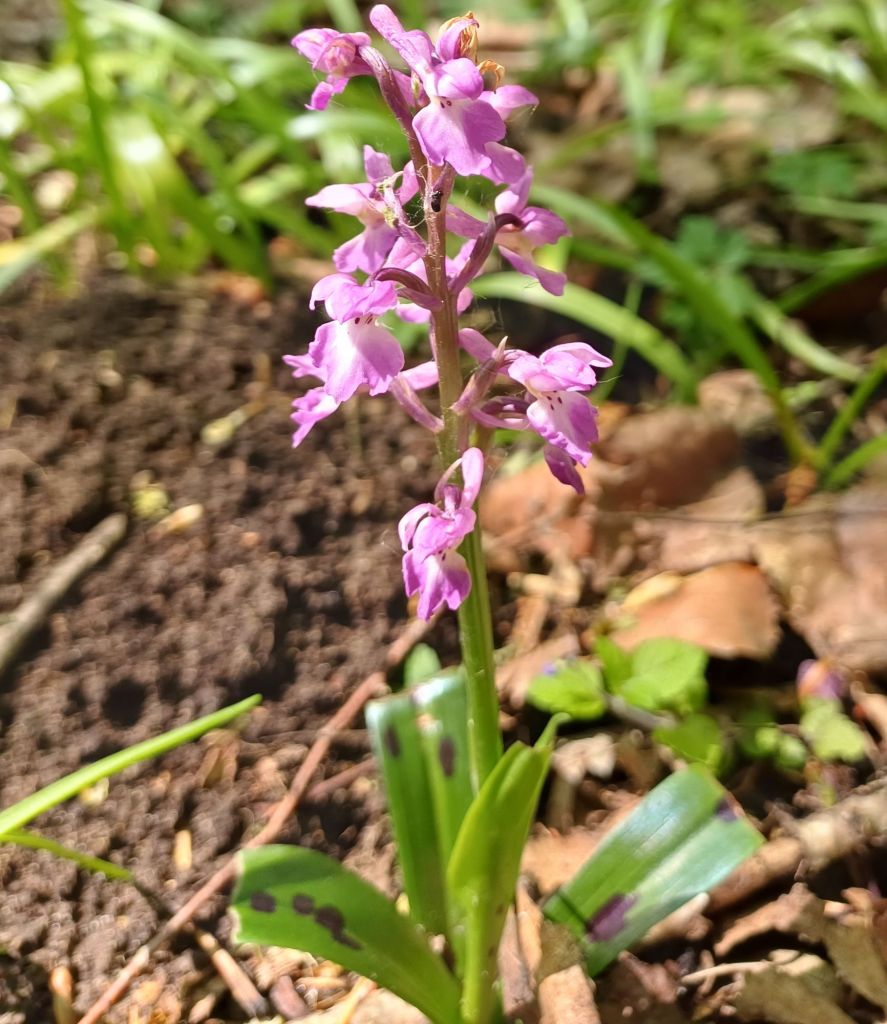
The early purple orchid is one of the earliest flowering orchids apart of the Orchidaceae family, which begin to flower from April-June. This orchid was found in Ashwellthorpe woods, as it common within grasslands and woodlands (The Wildlife Trust, ND). Their biggest threat is habitat loss caused by agriculture and urban development. They can also be eaten by cattle that are grazing in the area.
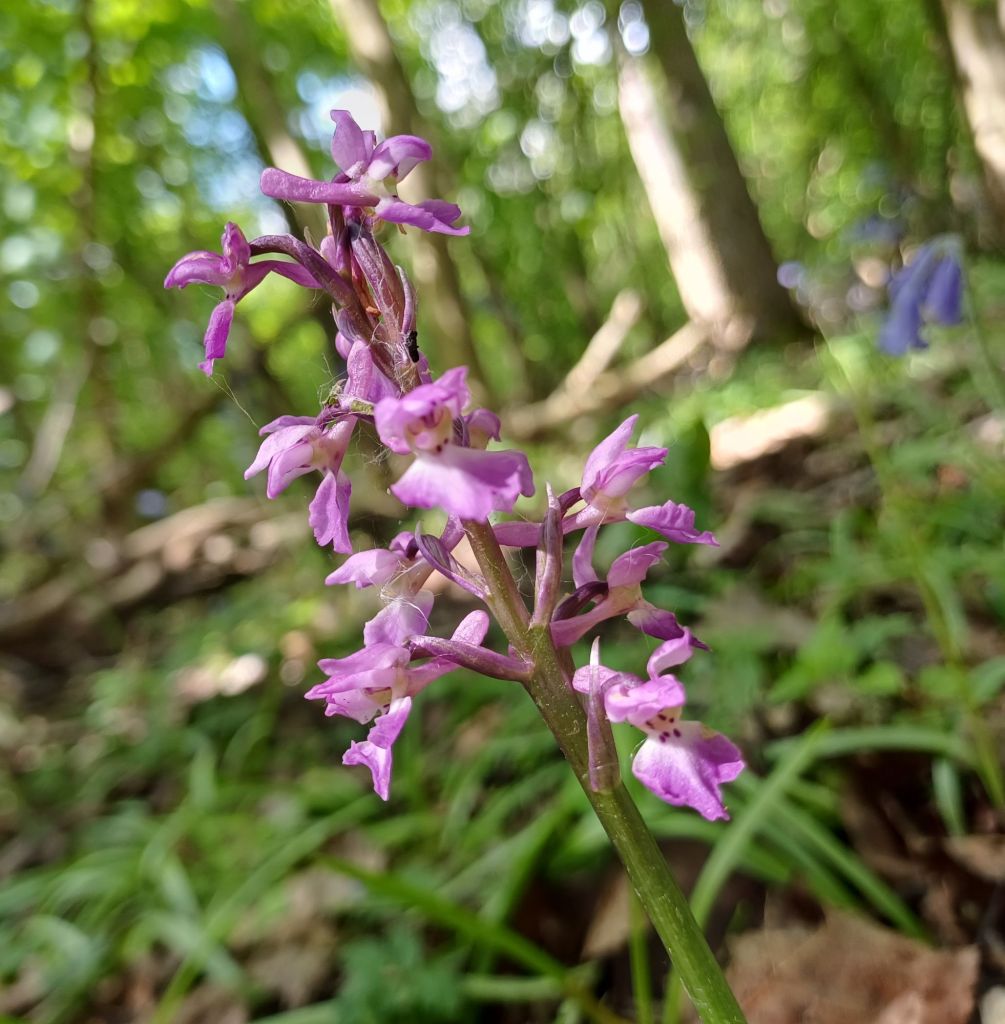
They can be identified by their pink/purple flower petals, with each plant having 10+ small flower heads, their stems can grow upto 60cm tall as a spike. There leaves also are used when identifying them, with 3-4 of them being at the base of the stem, mainly being green with many dark purple spots (Streeter and Hart-Davies, 2016).
These flowers have two root-tubers, with one being larger than the other. The larger tuber tends to be firmer, which stores the nutrients for the current years flower. Where as the smaller one is filling with nutrients which will be used for the following years flowers.
When Early Purple orchids first flower, they have a very sweet spell, with them often being compared to lily-of-the-valley, which helps attract bees to pollinate them, despite having no nectar which is a form of ‘food deception’. Yet after they are fertilized they begin to smell bad, like rotting flesh, as it begins to start focusing on seed production, which changes the chemical emissions and the flowers begin to wither (Woodland Trust, ND).
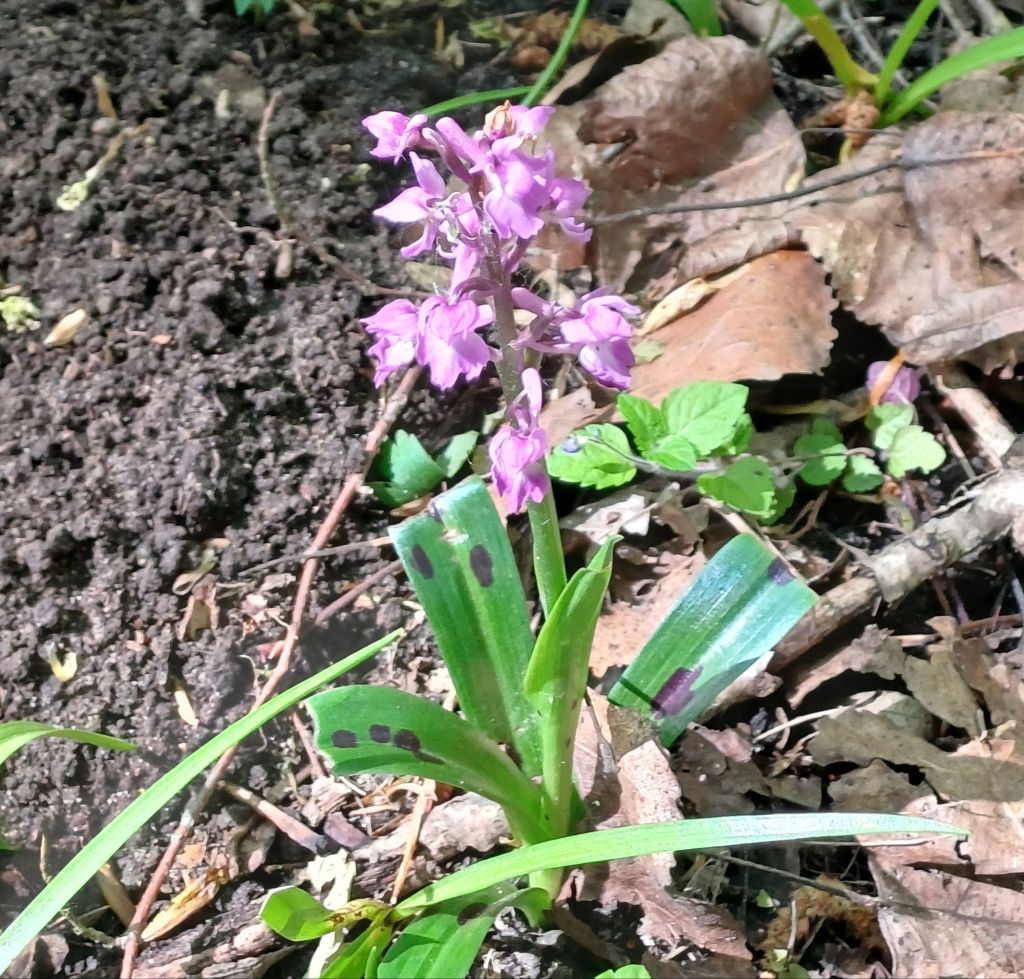
This flower has many different names such as, Dead mans fingers, with this name referring to the tuberous roots, cross flower, Gethesmane, red butchers, bloody butchers, referencing to the dark purple spots, and adder’s meat, which is common in regions where the snake common european adder/viper emerges at the same time as these flowers blossom.
It is most well known for being references in Shakespeare’s Hamlet, as ‘long purples’ and ‘Dead Men’s Fingers’ with the quote:
“There with fantastic garlands did she come
Of crow-flowers, nettles, daisies, and long purples
That liberal shepherds give a grosser name,
But our cold maids do dead men’s fingers call them:”
— Hamlet, Act 4, Scene 7 (Shakespeare online, 2021).
Within folklore, due to the early purple orchid having two root-tubers, with one being large and the other small, the greek believed if a man ate the larger tuber, a boy would be born, or if a women ate the smaller one, a girl would be born. In Scotland, the orchid used to be known as ‘Gràdh is Fuadh’ which stands for ‘love and hate’, as it was believed eating the larger tuber would make someone love you, and eating the smaller one would make someone hate you (Woodland Trust, ND). It was also believed that the early purple orchid grew underneath Christ’s cross, and that his blood dripped down onto the leaves, which created its black/purple spots, which led to the names Gethesmane and cross flower (Plantlife, 2026).
References
Plant Life. “Early-Purple Orchid – Plantlife.” Plantlife, 27 Apr. 2026, http://www.plantlife.org.uk/plants-and-fungi/early-purple-orchid/. Accessed 13 May 2026.
Shakespeare online. “Shakespeare on Flowers.” Www.shakespeare-Online.com, 2021, http://www.shakespeare-online.com/quotes/shakespeareonflowers.html. Accessed 13 May 2026.
Streeter, David, and Christina Hart-Davies. Collins Wild Flower Guide. 2nd edition ed., London, William Collins, 2016, pp. 680–681.
The Wildlife Trusts. “Early Purple Orchid | the Wildlife Trusts.” Www.wildlifetrusts.org, http://www.wildlifetrusts.org/wildlife-explorer/wildflowers/early-purple-orchid. Accessed 13 May 2026.
Woodland Trust. “Early Purple Orchid (Orchis Mascula) – Woodland Trust.” Woodland Trust, http://www.woodlandtrust.org.uk/trees-woods-and-wildlife/plants/wild-flowers/early-purple-orchid/. Accessed 13 May 2026.


Leave a Reply