
How does human activity affect the growth of lichen?
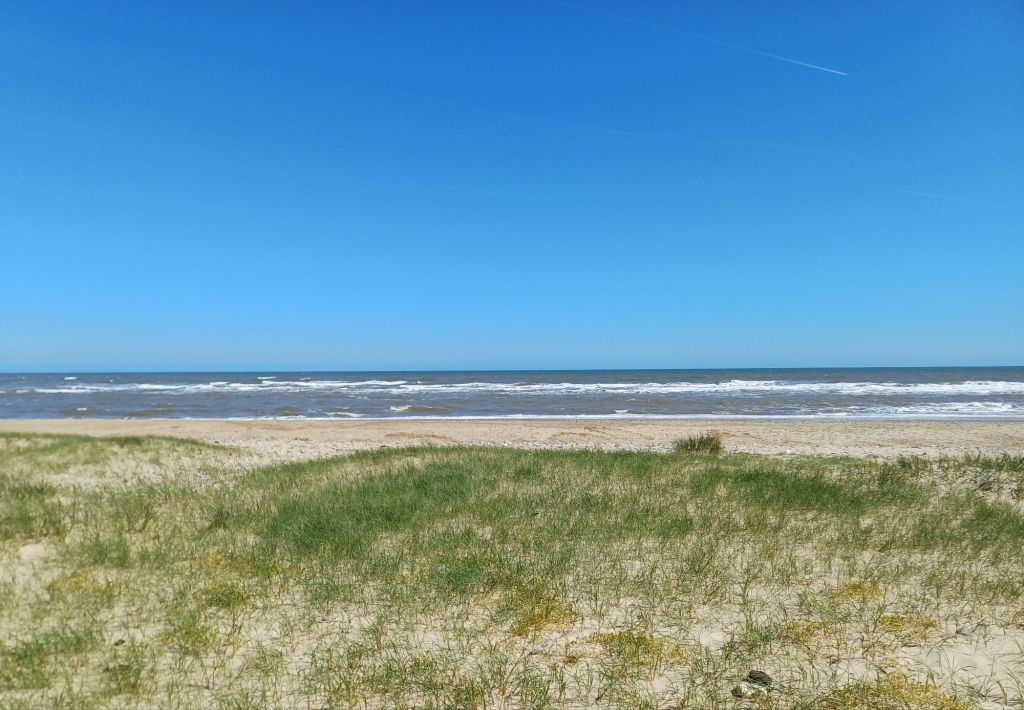
To conduct this study, we went to sand dunes at Winterton-on-Sea, which is along the Norfolk coast in Great Yarmouth. The Winterton Dunes is a National nature reserve, which is a area that is deemed to be of national importance, therefore action is taken place to protect the area. The acidic habitat mean that the species living in the area are adapted to these conditions, which is what makes it of national importance. As there are many rare species in the UK that are found at these dunes, such as the Natterjack toad, which is a protected species in the UK.
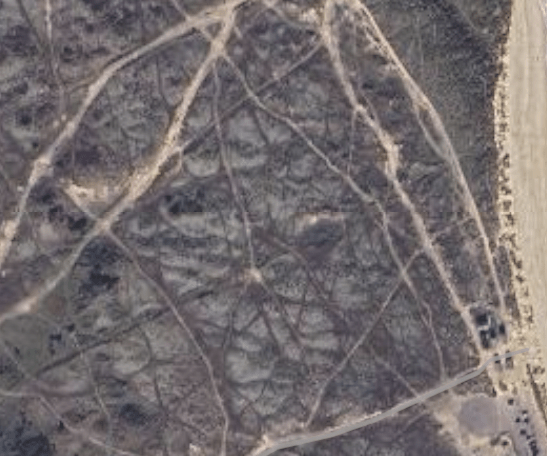
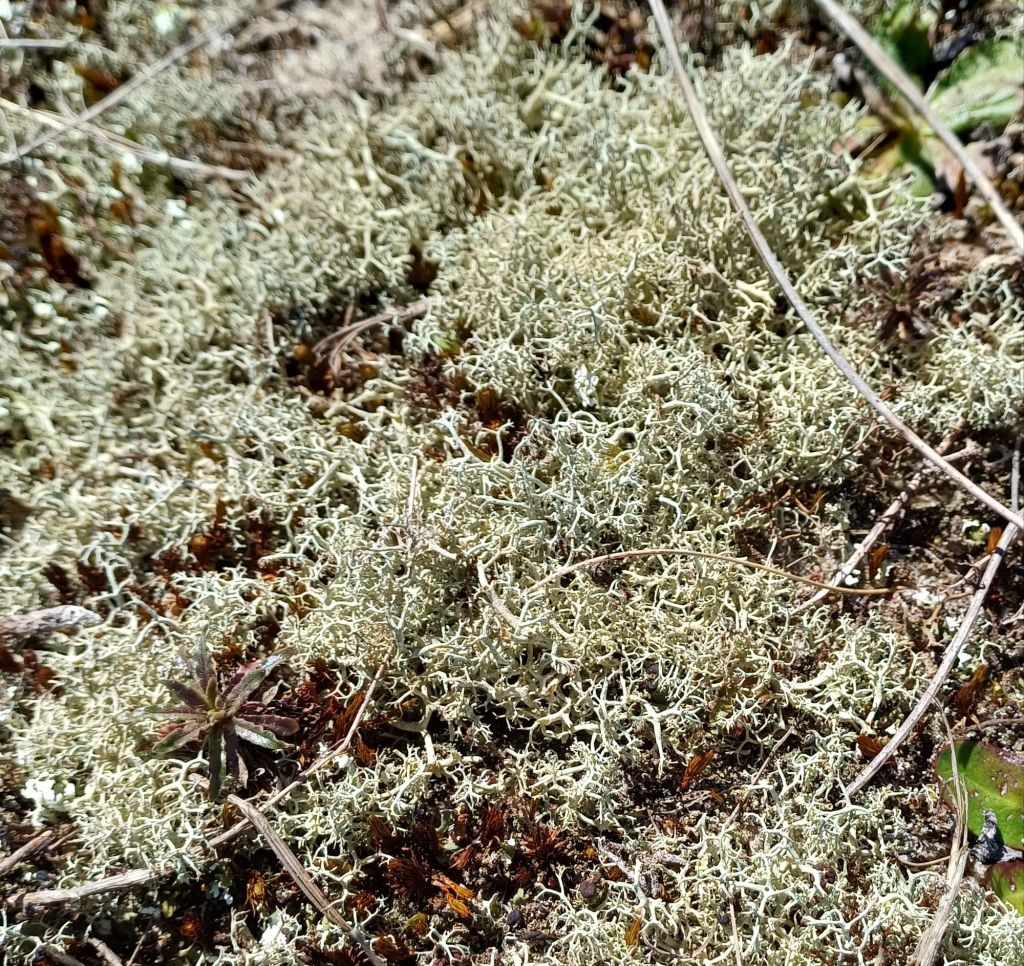
We wanted to find out if human footfall affected the growth of lichen on the grey dunes at Winterton, which are ‘grey’ from the large amounts of lichen that covers them. Due to the high numbers of victors, a large number of informal paths have been created, which can lead to the distribution of species being changed, as shown by the top down view of the dunes.
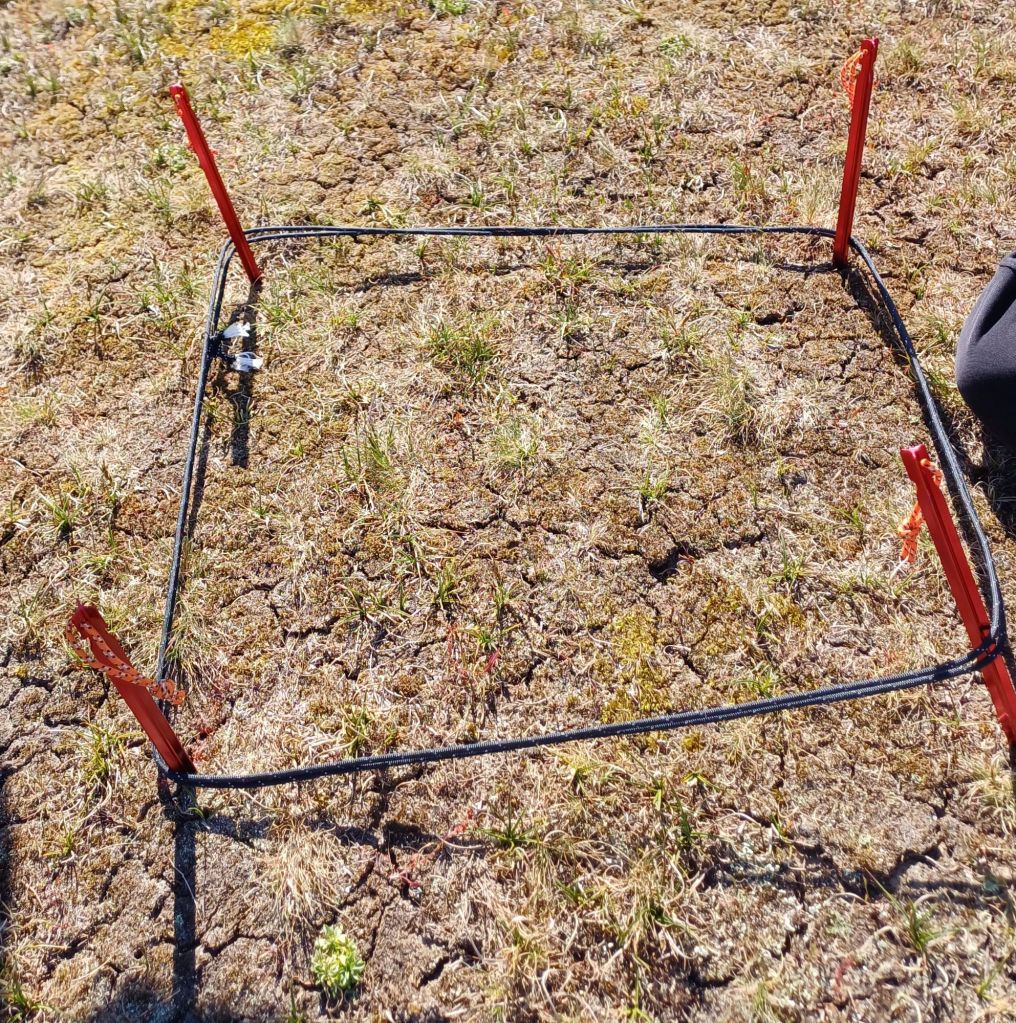
For our study, we measured the lichen cover, species count and species cover along 8 different paths, at 4 different points on each path, from the middle of the path (0m) to the outer of the path (2m) using a quadrat in 0.5m intervals, than calculated the mean lichen cover using the measurements from the four different points along the path for each distance, to get the results shows below in figure 1.
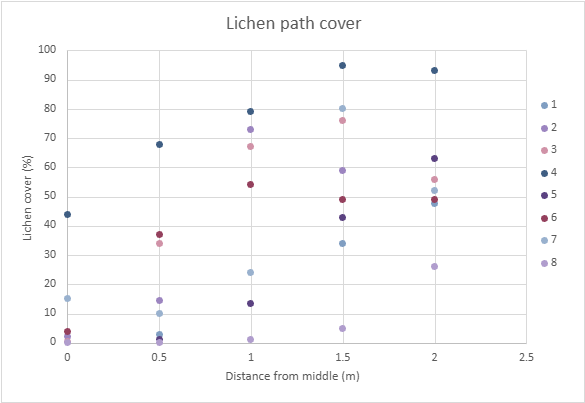
The scatter graph shows how the lichen cover in the middle of the path (0m) increases as you get further out, this also happened with the species count and cover overall. Which suggests that human footfall does play a large role in the growth of lichen, for example, with path 5, the mean percentage cover being 0-10% at the centre of the path compares to around 60-70% coverage at 2m.
However, in the future to make this study more accurate, we would need to measure more paths, as we only had time to measure 8 in total, where as we should’ve measured around 30, to have a accurate representation of all the paths at Winterton dunes. We would also have to make sure that the paths we picked were completely random, as due to the lack of time, we picked paths that were relatively close to us, instead of making it completely random.
To try and reduce the amount of paths being made, or used by visitors rope fences have began to be put in certain areas, however, there are very few signs that explain that these areas are not allowed to be accessed, or why. This may lead to people being curious, and going into the restricted area anyway. Therefore more larger signs are needed to explain that people are not allowed in these area, and why, as this may help discourage entry.


Leave a Reply