
Species name: Hydropotes intermis
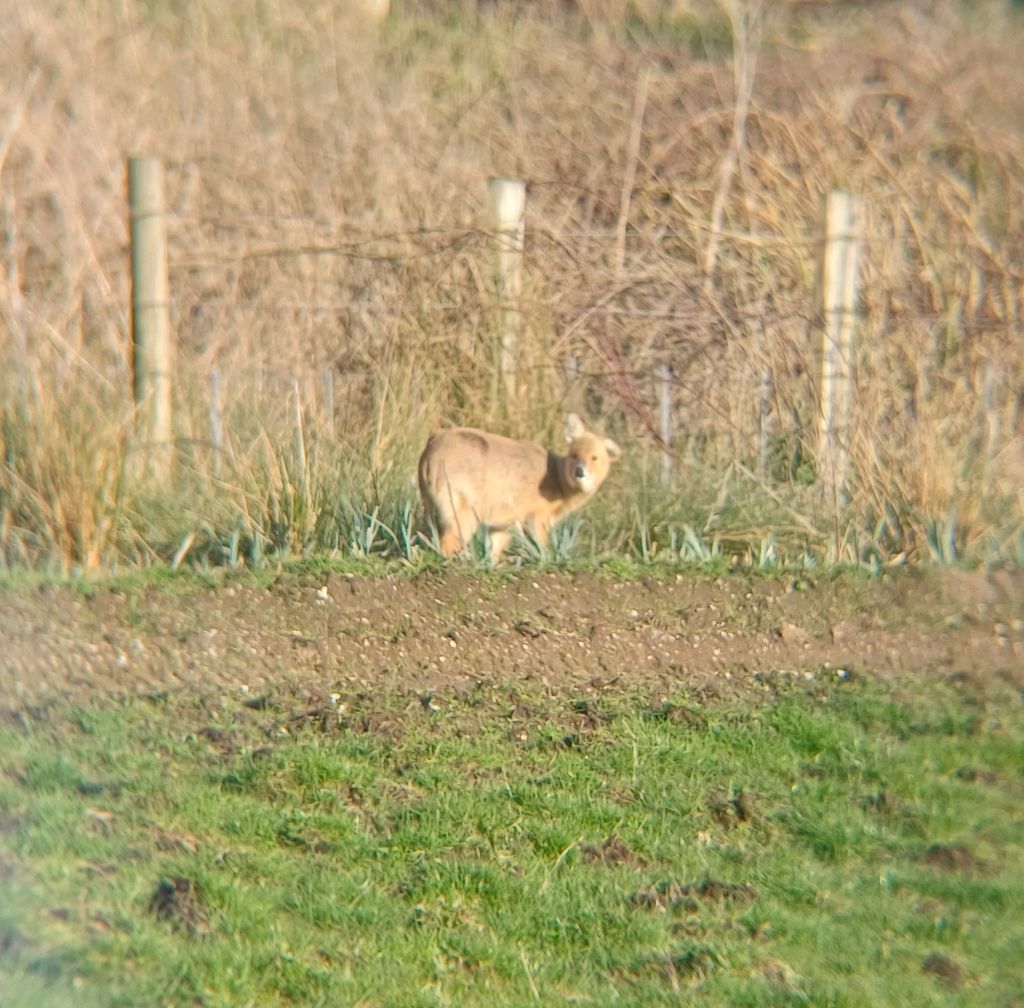
The Chinese water deer are a ginger/brown small deer, with them being around 55cm tall at the shoulder and 11-18kg when fully grown and tend to live up to 6 years. Water deer’s have a ‘teddy bear’ like appearance due to their fluffy ears and small black nose (The Wildlife trust, ND) They are mostly found in wetlands, as they favour marshy habitats, mostly across Bedfordshire, Cambridgeshire and Norfolk.
As shown by their name, Chinese water deer are native to China, and were first brought to the UK in the 1870s at London Zoo. They were introduced into the wild in 1929 after escaping Whipsnade Zoo, where now the UKs population of Chinese water deer make up 10% of their entire population (BDS, ND). However, these deer are listed as vulnerable on the IUCN Red List, and are threatened in China, due to habitat loss from climate change and urban development (Zongzhi. L, et al, 2023).
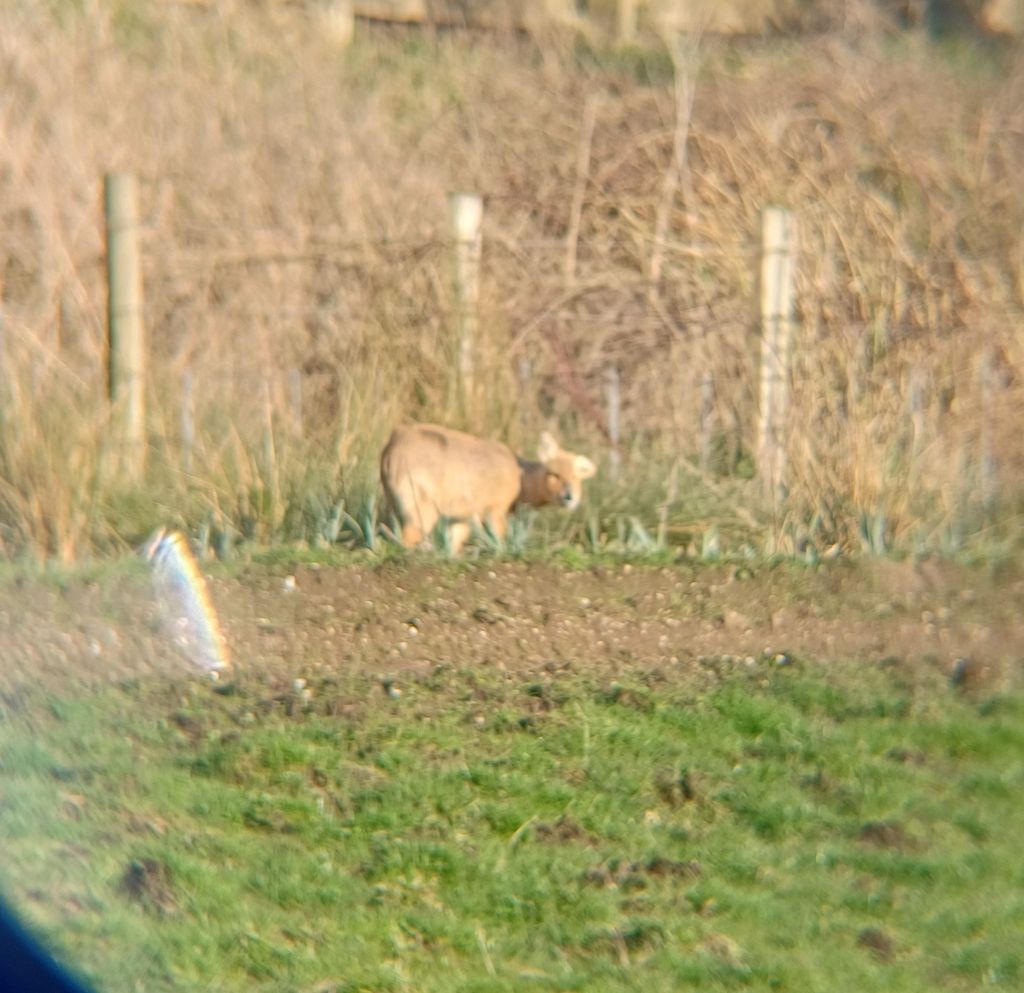
Instead of growing antlers, these deer grow prominent tusks, the males (bucks) tend to be larger than the females (does), they are used for display and weapons.
They are selective eaters, as tend to only eat the tender growing tips, leaves and shoots, as they are the easiest to digest, with most of their diet is made up of grazing (Baldwin. M, 2024).
Water deer are solitary mammals, expect from when they are mating. Their ruts last from November to January, as this allows it to happen at night, due to shorter days and the cooler temperatures benefit them, as heat stress is reduced. They low temperatures are also beneficial for the females, as the bucks who are able defend their territory during the colder months are seen as stronger, and therefore may carry ‘better’ genes (Baldwin. M, ND). The pairs made in November tend to stay together until April, with the bucks competing with each other for does, with the males slowly approaching the females with their neck stretched down. Another approach would be the buck laying by the doe, and shaking its head, if the doe is unreceptive it will get up and move away.
The does give birth from May-July after carrying the fawn for around 6 months, however, up to 40% of the fawns die within the first 4 weeks, due to stillbirths, weather, predation and poaching for traditional medicine. The dawn are able to start mating after 1 year, 1 doe can have up to 7 fawns within there lifetime, which is more than the average deer, which tends to have up to 4 (BDS, ND).
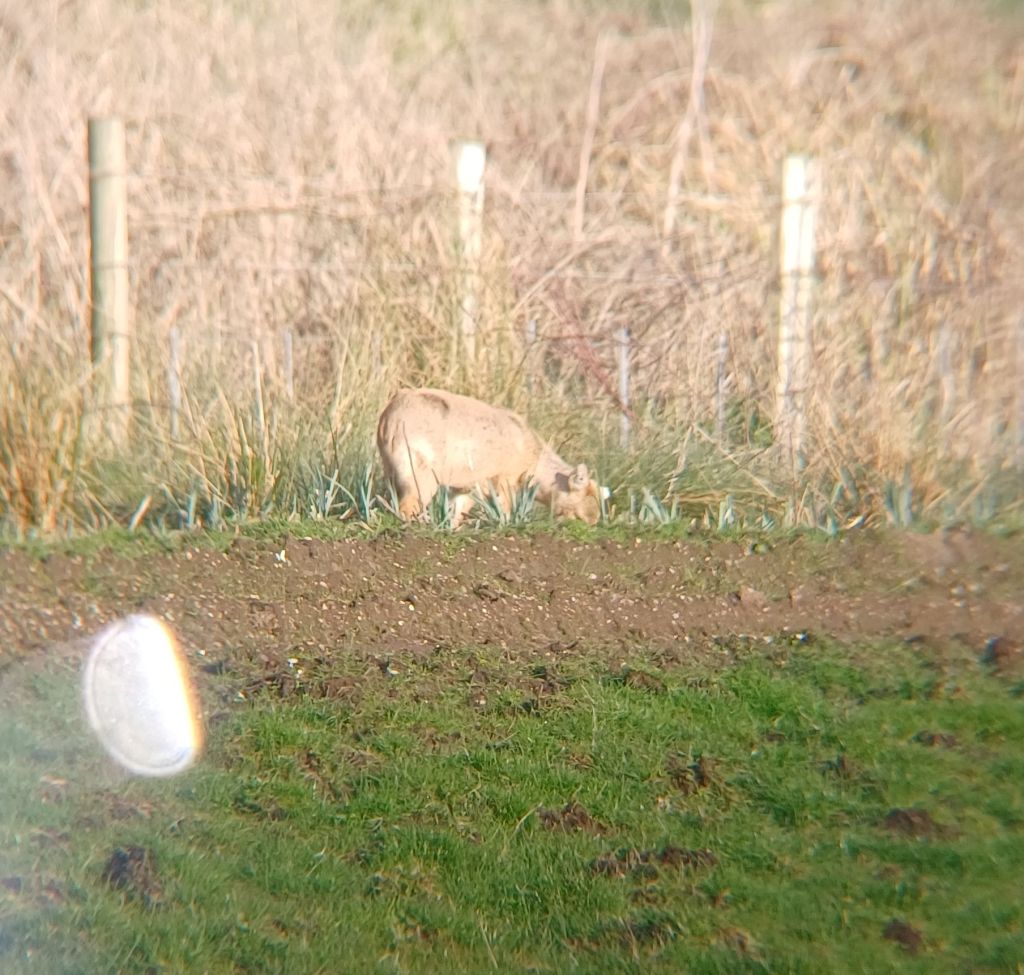
Within folklore, China and Korea the water deer is hunted for body parts to be used in traditional medicine, mostly for hunters, middle-aged and elderly men who are worried about their health, even though there has been no proven benefits to consuming these (Baldwin. M, 2025). The fawns were also hunted with dogs, due to the ‘milk lump’, also known as ‘deer treasure’, which was semi-digested milk in their stomachs, that were used in traditional medicine, as it was believed to slow aging, boost the immune system and ‘warm and nourish the five internal organs’. Within Yi folklore, within China, Vietnam and Thailand, water deer often appeared as shape-shifting transformative beings (Baldwin. M, 2025).
References
Baldwin, Marc. “Water Deer Food & Feeding – Species Eaten | Wildlife Online.” Wildlifeonline.me.uk, 2024, http://www.wildlifeonline.me.uk/animals/article/water-deer-food-feeding-species-eaten. Accessed 20 Apr. 2026.
—. “Water Deer Interaction with Humans – Culture | Wildlife Online.” Wildlifeonline.me.uk, Feb. 2025, http://www.wildlifeonline.me.uk/animals/article/water-deer-interaction-with-humans-culture. Accessed 20 Apr. 2026.
—. “Water Deer Interaction with Humans – Folk Remedies | Wildlife Online.” Wildlifeonline.me.uk, 6 July 2025, http://www.wildlifeonline.me.uk/animals/article/water-deer-interaction-with-humans-folk-remedies. Accessed 20 Apr. 2026.
—. “Water Deer Reproduction – Timing of the Rut | Wildlife Online.” Www.wildlifeonline.me.uk, http://www.wildlifeonline.me.uk/animals/article/water-deer-reproduction-timing-of-the-rut. Accessed 20 Apr. 2026.
Li, Zongzhi, et al. “Distribution Update of Water Deer (Hydropotes Inermis) and Prediction of Their Potential Distribution in Northeast China.” Scientific Reports, vol. 13, no. 1, 5 Apr. 2023, http://www.nature.com/articles/s41598-023-32314-z#citeas, https://doi.org/10.1038/s41598-023-32314-z. Accessed 20 Apr. 2026.
The British Deer Society. “Chinese Water Deer.” The British Deer Society, bds.org.uk/information-advice/about-deer/deer-species/chinese-water-deer/. Accessed 20 Apr. 2026.
The Wildlife Trust. “Chinese Water Deer | the Wildlife Trusts.” Www.wildlifetrusts.org, http://www.wildlifetrusts.org/wildlife-explorer/mammals/chinese-water-deer. Accessed 20 Apr. 2026.


Leave a Reply