
Species name: Turdus merula
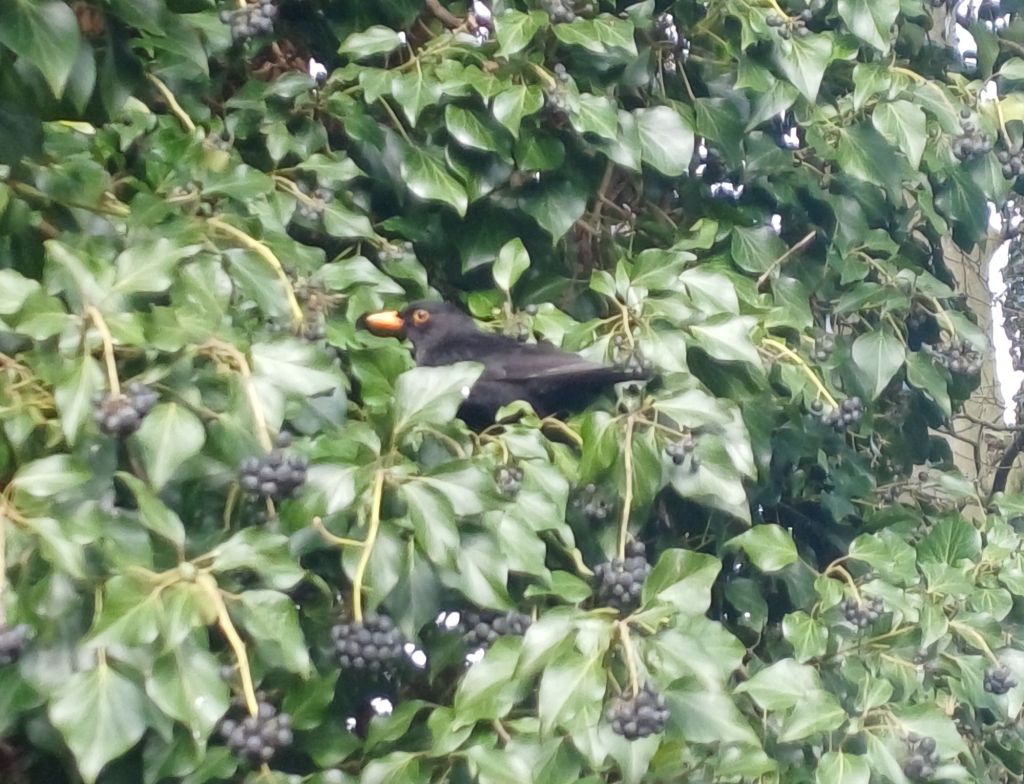
Also known as the common blackbird, the male blackbird are black with bright orange beaks and a orange ring around their eyes, whereas the females are brown, often with lighter streaks on their breasts as well as having a lighter orange beak. Blackbirds are apart of the Thrushes, which is a large and diverse family of songbirds, which are known for their songs and feeding habits. They are around 25 cm in length, weigh up to 100g and have a wingspan on 34-38 cm. They are on the green list of birds of conservation concern, meaning they are not threatened (RSPB, ND).
Blackbirds are one of the most common bird in the UK, with them being able to be spotted all year round in woodlands, urban and suburban areas, farmland and grasslands. They tend to feed on earthworms, insects and fruit, which is why they often only feed on the ground, so they are able to be seen hopping around in grass to try and find the insects and earthworms (Cornellab, 2020).
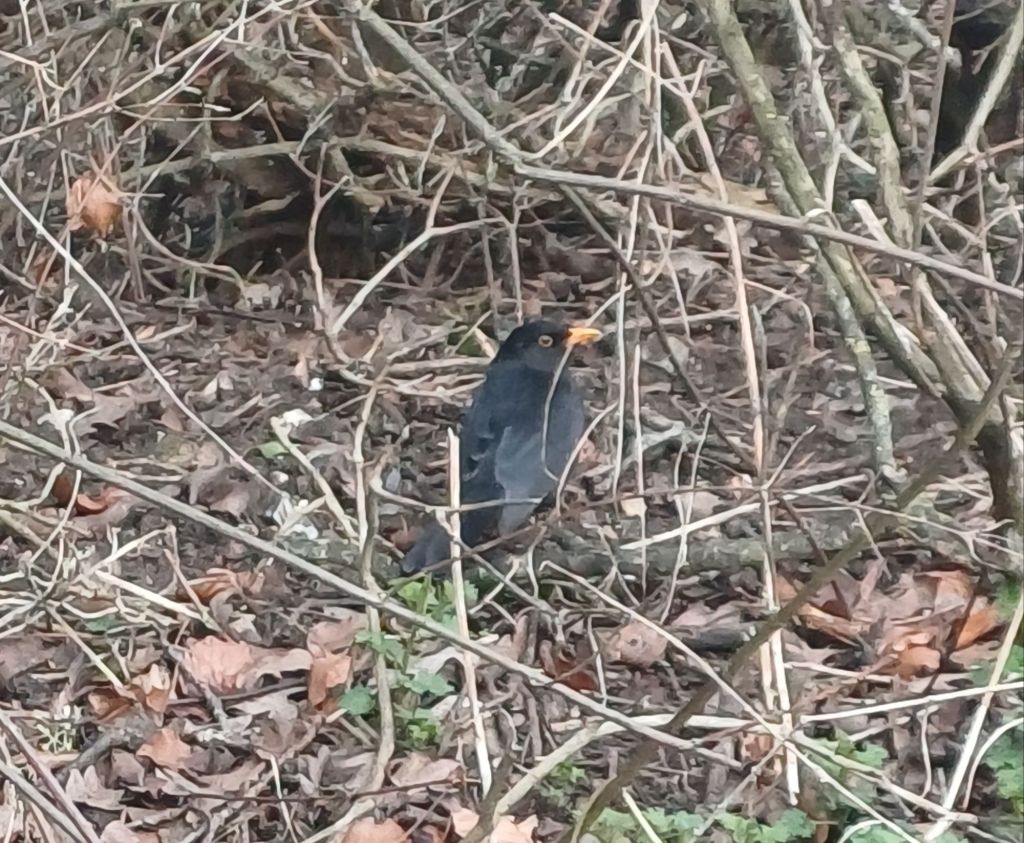
Within the UK, there are over 5 million breeding pairs between March and July. During breeding seasons, blackbirds form monogamous pairs, but tend to split up in between breeding seasons. Male blackbirds attempt to attract the female during courtship with different runs and head bowing movements, along with a song.
Within the year, each pair may raise up to three broods, with each brood having 3-4 chicks. The female does most the work building the nests, which tend to be a sturdy large cup, made of twigs, grass and mud on the inside to help keep its structure. They also do most the incubation of of the 2-6 eggs for around 10-19 days until the eggs hatch. However, both the male and the female bird will help feed the chicks for up to 2 weeks before they are able to leave the nest (Cornellab, 2020).
The male blackbird tend to defend their breeding territory by performing ‘bow and run’, which is where the male blackbird runs at the other blackbird before stopping to raise its head, before bowing it down, which is meant to intimidate other males, they also tend to make a ‘strangled’ song whilst performing the ‘bow and run’. Female blackbird can also be aggressive before breeding seasons, when competing for a mate, despite this happening less often than male birds fighting, it tends to be more violent.
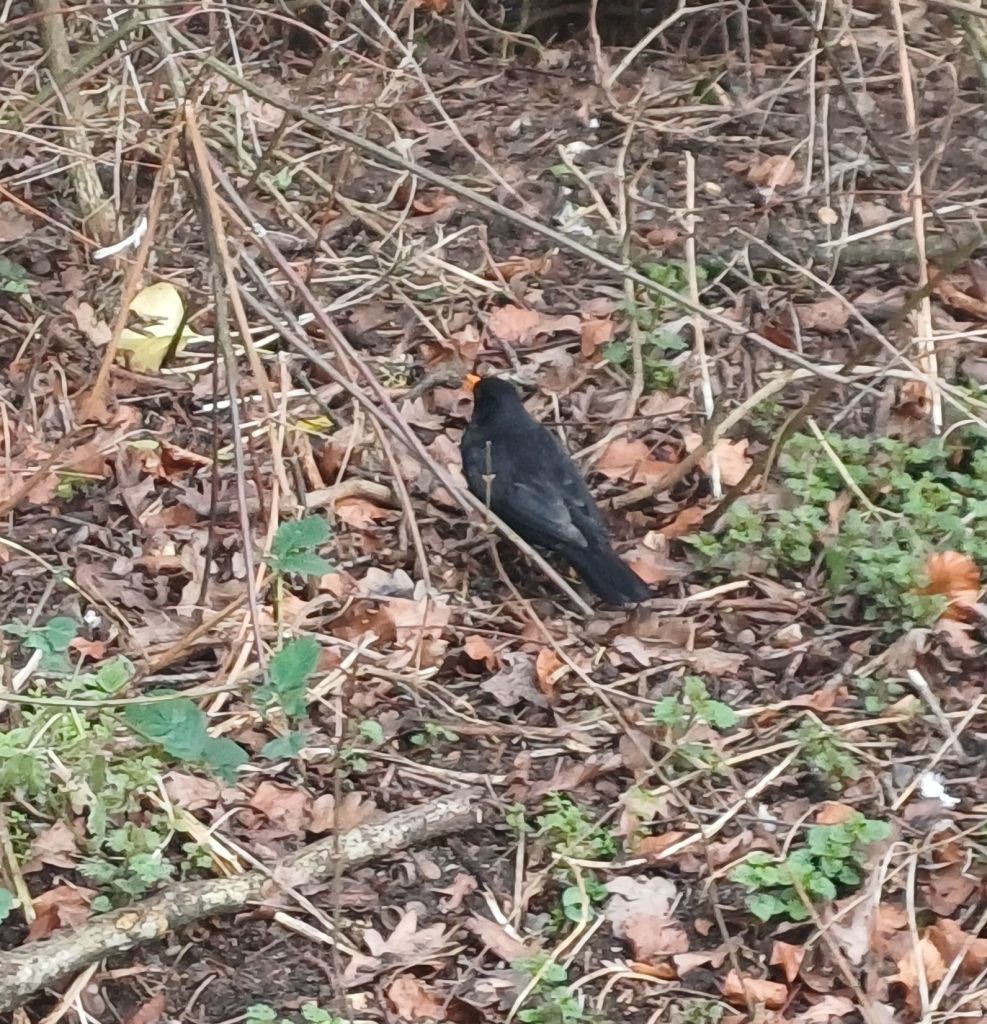
Within folklore, there are multiple tails surround the blackbirds. Such as within a french tail, where it claims that the blackbird was originally white, but a magpie told it of a cavern full of treasure, but to access it the blackbird must offer services to the prince, but instead the blackbird went straight to the treasures. This led to a fire-breathing creature to chance after it, whilst the blackbird managed to escape, its feathers were charred and turned black. Some also believed that the Devil took the form of a blackbird when trying to temp St Benedict, to influence him (Sedgwick, I, 2024).
References
Works Cited
Cornellab of Ornithology. “Eurasian Blackbird Life History, All about Birds, Cornell Lab of Ornithology.” Allaboutbirds.org, 2020, http://www.allaboutbirds.org/guide/Eurasian_Blackbird/lifehistory. Accessed 19 Apr. 2026.
RSPB. “Blackbirds | Facts about Male & Female Blackbirds.” Www.rspb.org.uk, http://www.rspb.org.uk/birds-and-wildlife/blackbird. Accessed 19 Apr. 2026.
Sedgwick, Icy. “The Folklore of Garden Birds: Blackbirds, Sparrows, Wrens & Robins.” Icy Sedgwick, 17 Aug. 2024, http://www.icysedgwick.com/garden-birds/. Accessed 19 Apr. 2026.


Leave a Reply