
Species name: Coccinella septempunctata
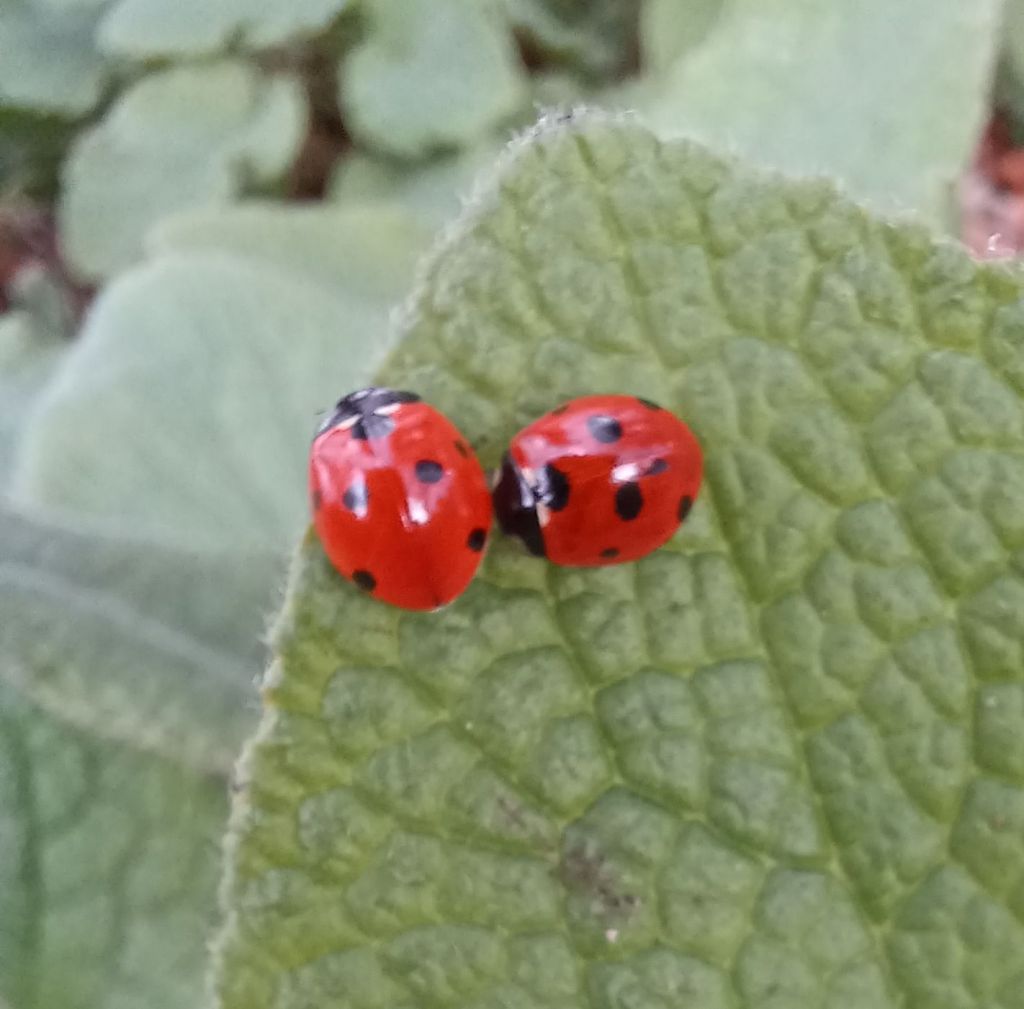
The 7 spotted ladybird is the most common ladybird species, with it being able to be spotted from march-october in nearly every habitat in the UK. They are apart of the Coccinellidae family and are considered a small beetle. The ladybird is native to Europe and most of Asia, it has also been introduced to North America to be used as a ‘biological pest control agent’ in order to kill large amounts of aphids. This ladybird is currently common, and not of conservation concern.
The red colour is to warn predators, such as birds, spiders and larger beetles, that they are distasteful, they also release a yellow substance from their joints when touched, from a form of ‘controlled bleeding’ which stains (The Wildlife Trust, ND).
They tend to feed on aphids they find on plants, with one ladybirds being able to eat up to 5000 aphids in its lifetime (Woodland Trust, 2021). However, if there is little aphids, ladybirds can also survive of eating pollen, nectar and whiteflies (Hodek. I, Michaud. J.P, 2008).
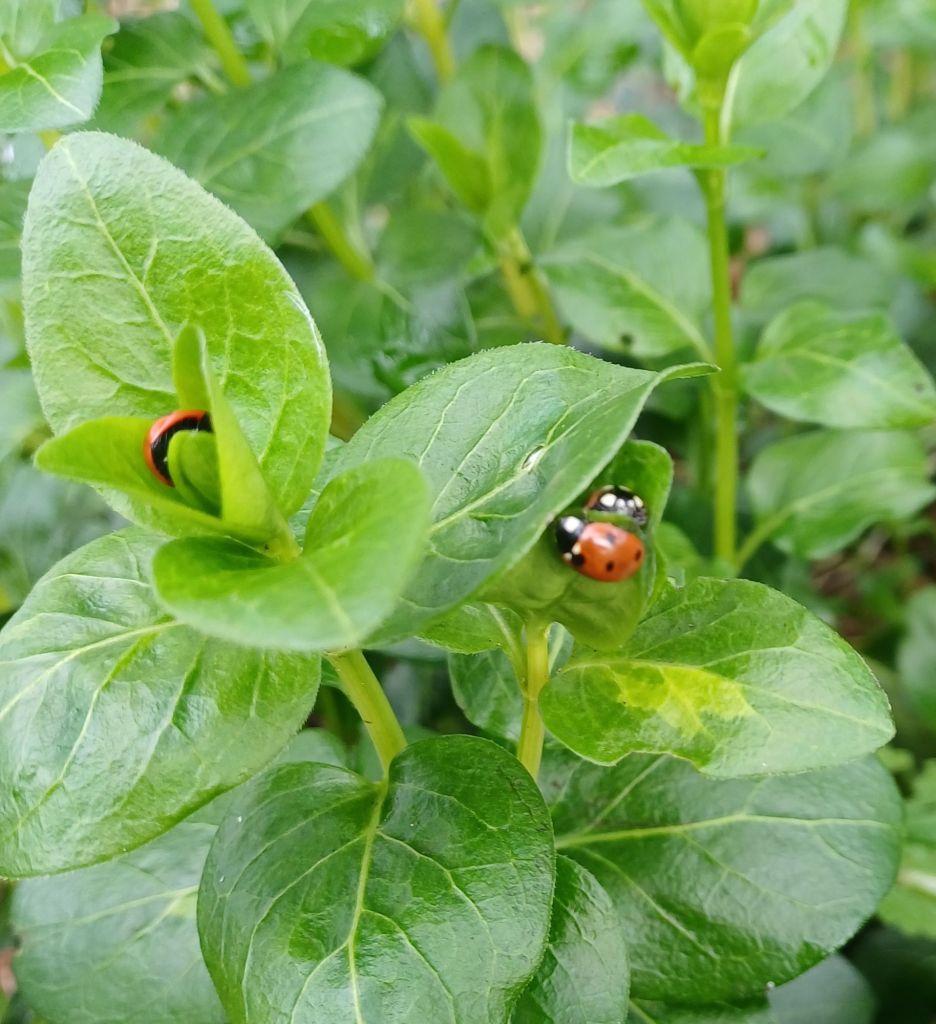
Ladybirds and polygynandrous, meaning both the males and females have multiple mating partners, as this helps increase the chances of having successful offspring (The Animal Facts, 2025). The females attract the male through a sex pheromone, that is released more by females who have not mated yet (Luca. F, Sloggett. J, 2025).
Ladybirds mate from may, and lay their fertilised eggs between june and july on leaves in areas where they can find enough prey for nutrients for themselves and also their larvae. Their larvae are brown/grey with four pairs of bright orange marks across their bodies and eat aphids until they can pupate. Due to adult 7-spotted ladybirds being widely dispersed, this also means that their larvae is widely dispersed, which helps reduce intraspecific competition, which is competition between members of the same species for resources (Hodek. I, Michaud. J.P, 2008). There can also be deterrents that lead to the female not laying their eggs within certain areas. For example, if they see tracks of larvae from another female, as by laying eggs here, it may lead to cannibalism of the eggs by other ladybirds.
In the Winter, these ladybird will go through hibernation within vegetation. They tend to cluster for warmth, as well as clustering so that once they finish hibernating, they will have a mate to breed with.
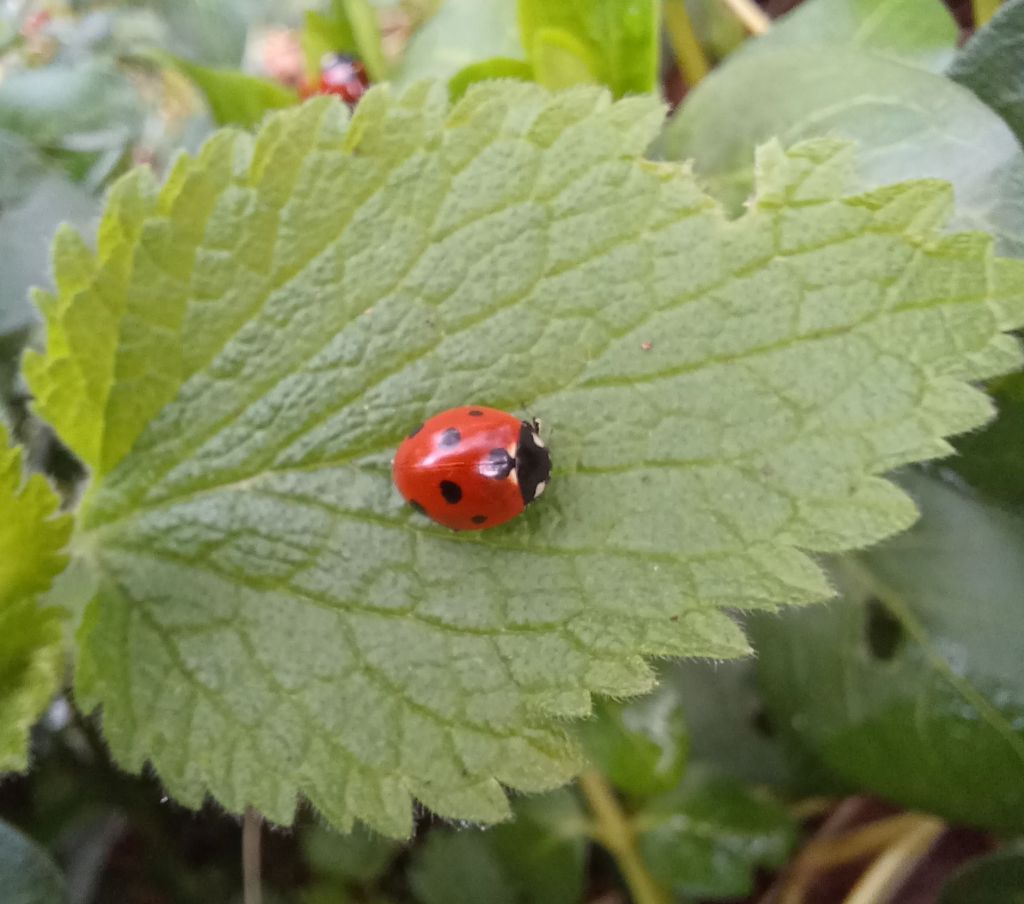
Within folklore, many cultures in Europe believe it is unlucky to kill a ladybird. In England, many farmers believed that it large amounts of ladybird were found within spring, it would mean that crops would be abundant. This is also similar in many other cultures, as they all believe that the ladybird will bring good luck in a certain way. In Scotland, within the ‘Folklore and Superstitious Beliefs in the West of Scotland (1879)’ James Napier he said that when grown girls caught a ladybird they would repeat this couplet ‘ Fly away east or fly away est, And show me where lives the one I like best,’, showing good luck if they ladybird flew the direction the girl wished (Napier. J, 1879).
Their name ‘Ladybird’ in the UK refers to mother Mary, which is known as ‘Our Lady’ or the ‘Virgin Mary’, as she was often depicted as wearing a red cloak.
References
Feuerriegel, Luca, and John J. Sloggett. “Sexual Calling Behaviour, and the Effects of Immediate Mating History and Consexual Presence in the Seven‐Spot Ladybird, Coccinella Septempunctata.” Entomologia Experimentalis et Applicata, vol. 173, no. 5, 6 Mar. 2025, pp. 393–402, onlinelibrary.wiley.com/doi/10.1111/eea.13551, https://doi.org/10.1111/eea.13551. Accessed 19 Apr. 2026.
Hodek, Ivo, and J P Michaud. “Why Is Coccinella Septempunctata so Successful? (a Point-of-View).” European Journal of Entomology, vol. 105, no. 1, 15 Feb. 2008, pp. 1–12, https://doi.org/10.14411/eje.2008.001. Accessed 19 Apr. 2026.
Napier, James. “Folk Lore, Or, Superstitious Beliefs in the West of Scotland within This Century : With an Appendix Shewing the Probable Relation of the Modern Festivals of Christmas, May Day, St. John’s Day, and Halloween, to Ancient Sun and Fire Worship : Napier, James, 1810-1884 : Free Download, Borrow, and Streaming : Internet Archive.” Internet Archive, 1879, archive.org/details/cu31924029910449/page/n7/mode/1up. Accessed 19 Apr. 2026.
The Animal Facts. “Seven-Spot Ladybug | the Animal Facts | Appearance, Diet, Habitat.” The Animal Facts, 18 Jan. 2025, http://www.theanimalfacts.com/insects-spiders/seven-spot-ladybug/. Accessed 19 Apr. 2026.
The Wildlife Trusts. “7-Spot Ladybird | the Wildlife Trusts.” Www.wildlifetrusts.org, http://www.wildlifetrusts.org/wildlife-explorer/invertebrates/beetles/7-spot-ladybird.
Woodland Trust. “7-Spot Ladybird (Coccinella Septempunctata).” Woodland Trust, 2021, http://www.woodlandtrust.org.uk/trees-woods-and-wildlife/animals/beetles/7-spot-ladybird/. Accessed 2 Mar. 2026.
 Jorja's Ecology Blog
Leave a comment