
Species name: Cygnus olor
The Mute swan is one of the most common bird is the UK, as well as them being able to be seen all year round throughout towns, countrysides, canals, ponds, lakes and rivers within the UK (The Wildlife Trust, 2015). On average, they can live up to 10 years and on average grow up to 1.5m in length, as well as having a wing span of 2.2m.
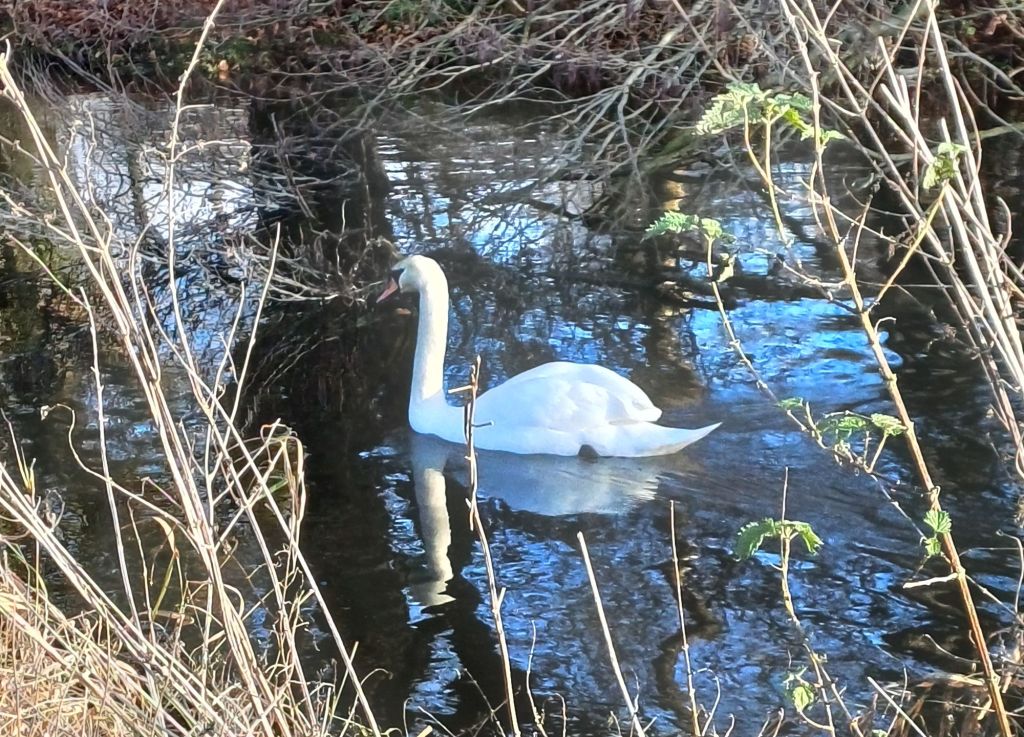
There have been many conservation efforts for mute swans, which has helped it be labelled ‘least concern’ by the IUCN, and is also protected in the UK under the Wildlife and Countryside act, 1981 (The Wildlife Trust, 2015). Despite this, Swans still do have threats to their survival through habitat loss, pollution, hunters, and the avian flu. Many swans are loosing their habitat through oil pollution, drainage and peat extraction, which takes away spaces for the birds to lay their eggs (International Fund for Animal Welfare, 2021).
A major pollutant within water that effected Mute swans was lead pollution, mainly from lead finishing weights and bullets, which lead to many swans getting lead poisoning and dying, as even low levels of exposure can have large effects on animals, with the swans being at a larger risk, due to living in areas where fishing is common. The swans often consumed the discarded lead weights when feeding, which led to lead poisoning, killing 4000 Mute swans dying a year and a 15% population decline between 1956 and 1978. This led to the import, sale and use of lead weights, which were most likely to be eaten by swans, to be banned in 1987 in the UK (Kevin Wood, 2019).
Mute Swans are native to Europe and Asia, but are considered an invasive species in North America after being introduced in the late 1800s, due to them competing with native wildlife. These swans eat up to 8 pounds of submerged aquatic vegetation daily, and often uprooting more whilst eating, which therefore can be damaging to the other species within these habitats. Within North America, the introduction of the Mute Swans led to the decline of the native Trumpeter swan population as they compete for the same food and habitats along with other bird species within the area. Mute Swans also tend to be aggressive other aquatic birds within the area, especially during their breeding seasons (E. Ness and B. Williams, 2023).
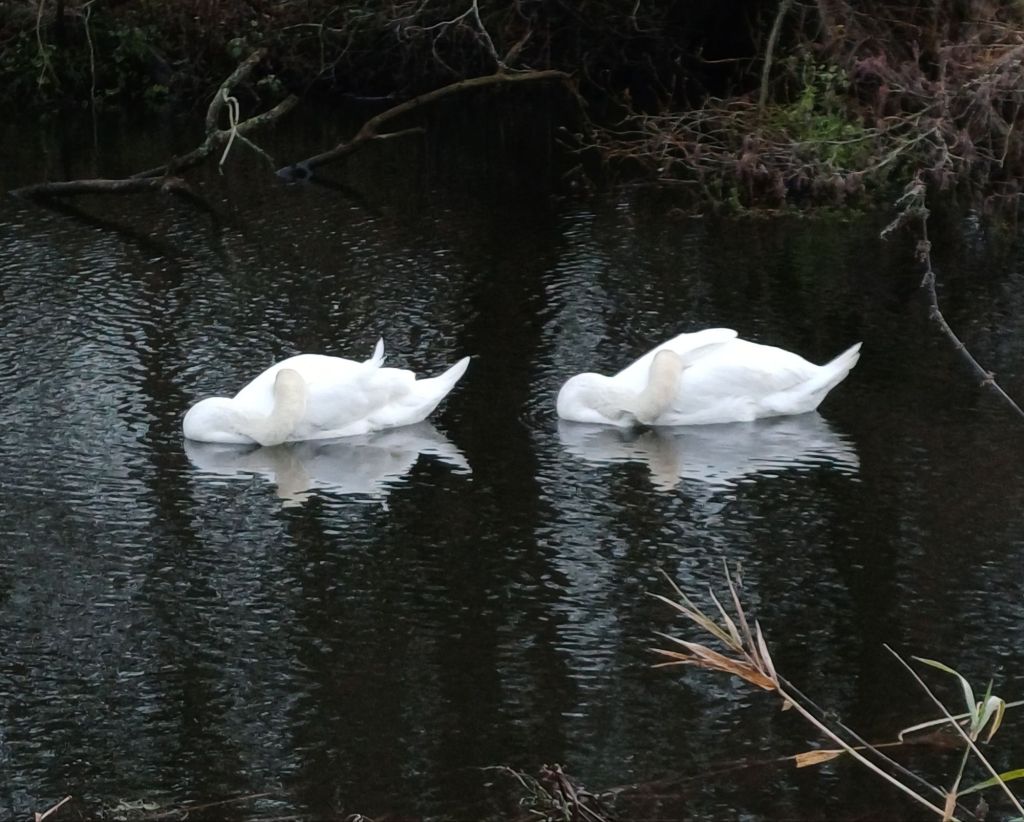
Male swans are known as a ‘cob’ and a female is known as a ‘pen’, with both being involved in parenting, with the cob guarding the nest whilst the pen leaved to feed their young (The Wildlife Trust, 2015).
Mute Swans usually start breeding when they are around 4 years old (British Trust for Ornithology, 2023). These swans often go through a mating ritual, which can often take over 20 minutes, as this long process shows their bond between the two birds. The courting process between the swans starts with each swan lowering their wings and dipping their heads, to great each other, which can take up to a few minutes. After this, the swans will start to synchronise their movements, along with making more physical contact, by pressing their breasts together, whilst raising and lowering their necks and maintaining eye contact. After this, one swan will drape their neck over their partners, where the actual copulation can now take place, so they can breed. After the act, they clean and continue with usual feeding, but whilst staying in close proximity. (Mark Nicolaides, 2025).
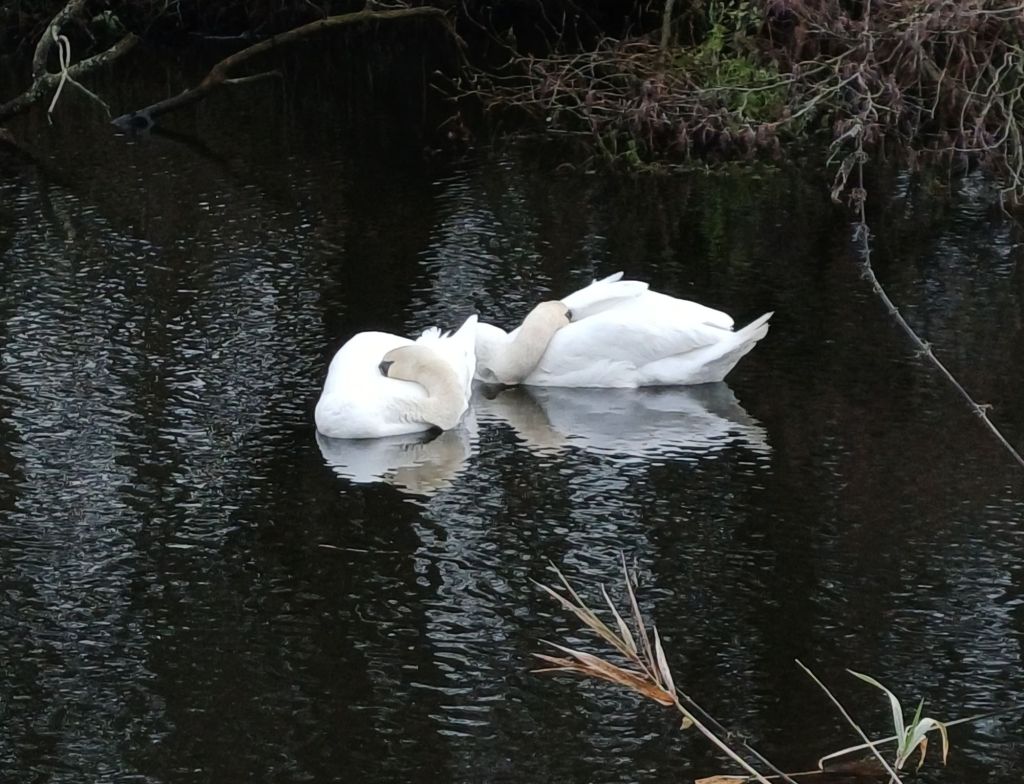
Mute Swans are often used as representation within ballet, due to their graceful movements, which can be compared to the movements within ballet, with a famous example being the ballet Swan Lake by the ballet Pyotr Ilyich Tchaikovsky in 1877. Within folklore, Swans are often a symbol of fidelity, due to them mating for life. Mute swans have also been represented in stories such as ‘The Ugly duckling’, due the young swans (Cygnets), ‘ugly’ grey feathers until it ‘transforms’ during its first year to the white swan.
References
British Trust for Ornithology. “Mute Swan | BTO.” Bto.org, 2023, http://www.bto.org/learn/about-birds/birdfacts/mute-swan. Accessed 3 Feb. 2026.
https ://datalinked.uk, DataLinked UK-. “Conservation Work.” Swan Lifeline, swanlifeline.uk/conservation.
International Fund for Animal Welfare. “Swans: Facts, Threats, Habitat, and FAQs | IFAW.” IFAW, 2021, http://www.ifaw.org/uk/animals/swans#threats. Accessed 3 Feb. 2026.
Ness, Eric, and Ben Williams. “Understanding the Impacts of Invasive Mute Swan Populations in Illinois.” Outdoor Illinois Journal, 1 May 2023, outdoor.wildlifeillinois.org/articles/understanding-the-impacts-of-invasive-mute-swan-populations-in-illinois. Accessed 3 Feb. 2026.
Nicolaides, Mark. “Swans Mating.” Swanlife, 2025, http://www.swanlife.com/swans-mating-ritual. Accessed 2 Feb. 2026.
The Wildlife Trust. “Mute Swan | the Wildlife Trusts.” Wildlifetrusts.org, 2015, http://www.wildlifetrusts.org/wildlife-explorer/birds/waterfowl/mute-swan. Accessed 2 Feb. 2026.
Wood, Kevin. “Mute Swans and Lead Poisoning.” Bou.org.uk, 18 Mar. 2019, bou.org.uk/blog-wood-mute-swan-lead-poisoning/. Accessed 3 Feb. 2026.
 Jorja's Ecology Blog
Leave a comment