
Species name: Streptopella decaocto
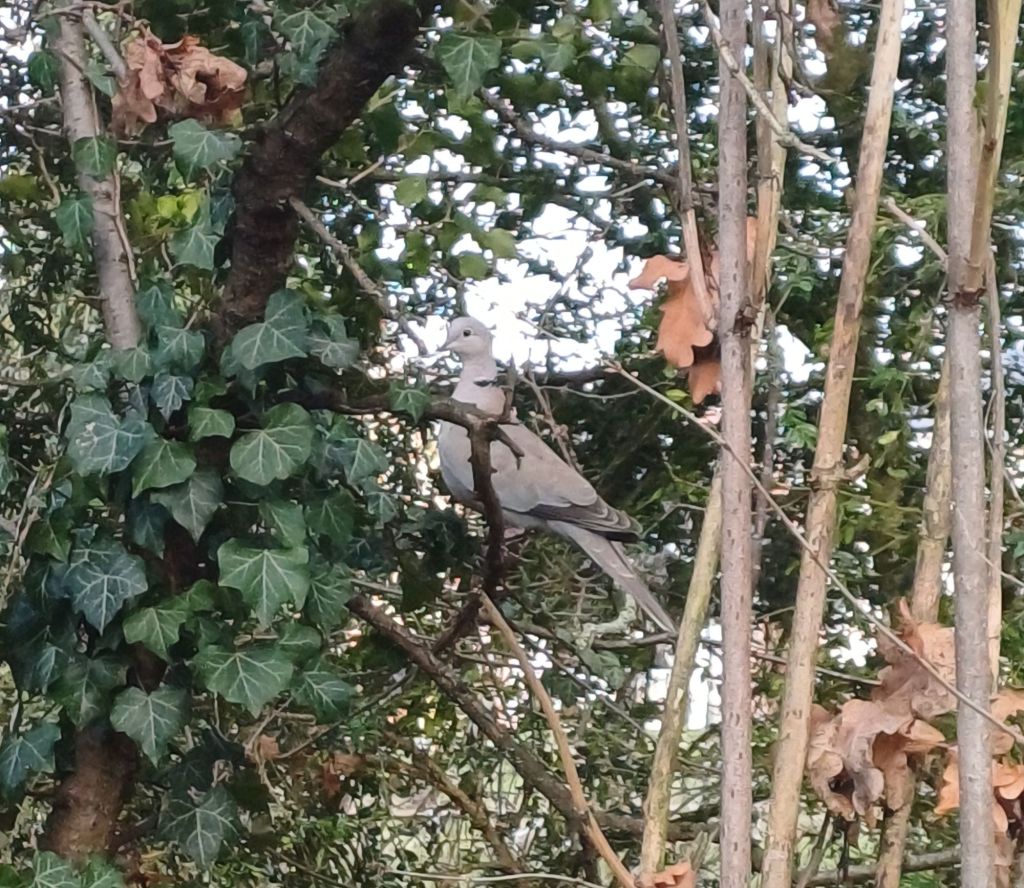
The collared dove can be identified by its pale grey feathers, thin black collar and white-tipped tail with a slightly pink head and breast (Ward. M 2020). They are a common bird in the UK which can be spotted in many different habitats throughout the entire year, however, they tend to prefer woodlands, parks and farmland. They have an average lifespan of 3 years, and weigh around 200 grams (The Wildlife Trust, ND). Within conservation, the collared doves are classified as green under the Birds of Conservation concern.
The collared dove is apart of the Columbidae family, along with other dove species and pigeons, with the 5 species of doves in the UK being much smaller than the pigeons.
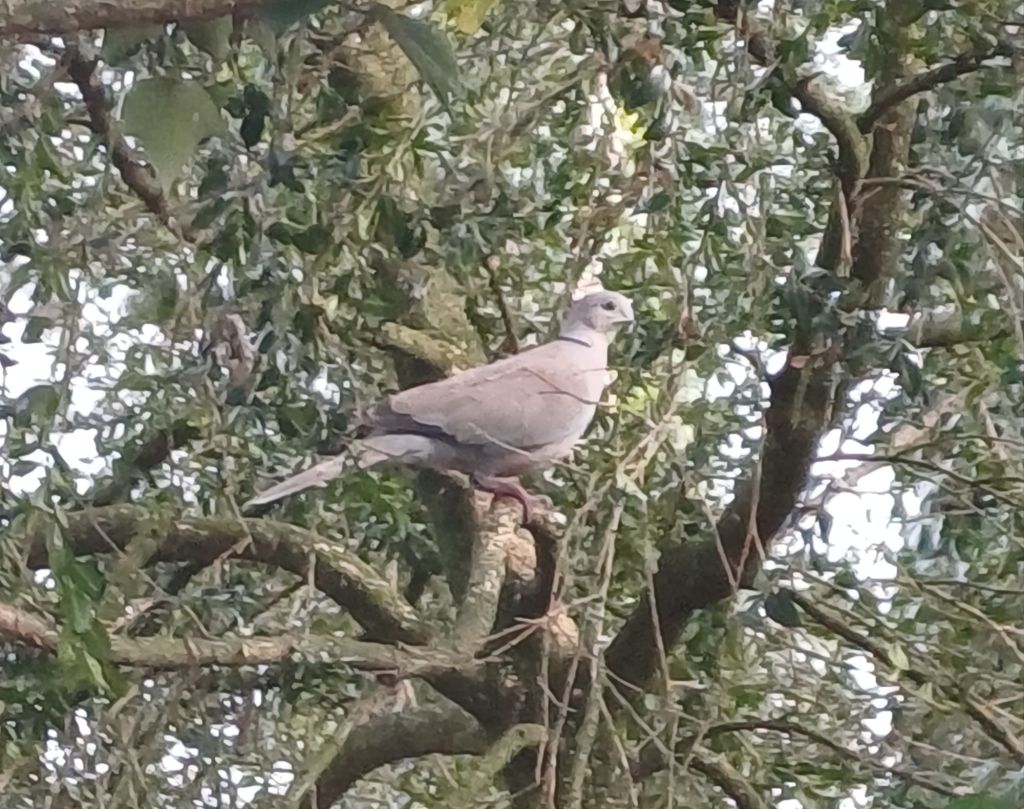
Originally, the collared doves are from Asia, but due to being adaptable, and being able to cope in cooler countries, it has lead to their rapid expansion, with over 800k pairs breeding in the UK (RSPB, ND). However, the number of collared doves has began to decline since 2005, which is believed to be partly due to the increase in woodpigeon populations, as both birds have to compete for food and territory. It is also due to disease, such as Trichomonosis, which is spread through feeding, breeding, or drinking/eating contaminated food or water. It causes the throat to get lesions, which makes it difficult for the birds to feed, and therefore are likely to die (Garden Wildlife Health, 2017). However, these diseases can also affect livestock, such as chickens, which can cause frustration to farmers, especially as it is illegal to shoot/kill doves in the UK (Sharp. G, 2022).
The doves also disrupt farmers by eating crop seeds as collared doves feed on seeds and grain they find on the ground, which they are not picky on, due to needing to eat what they can find, due to competition with other birds for food, so their food sources can be limited.
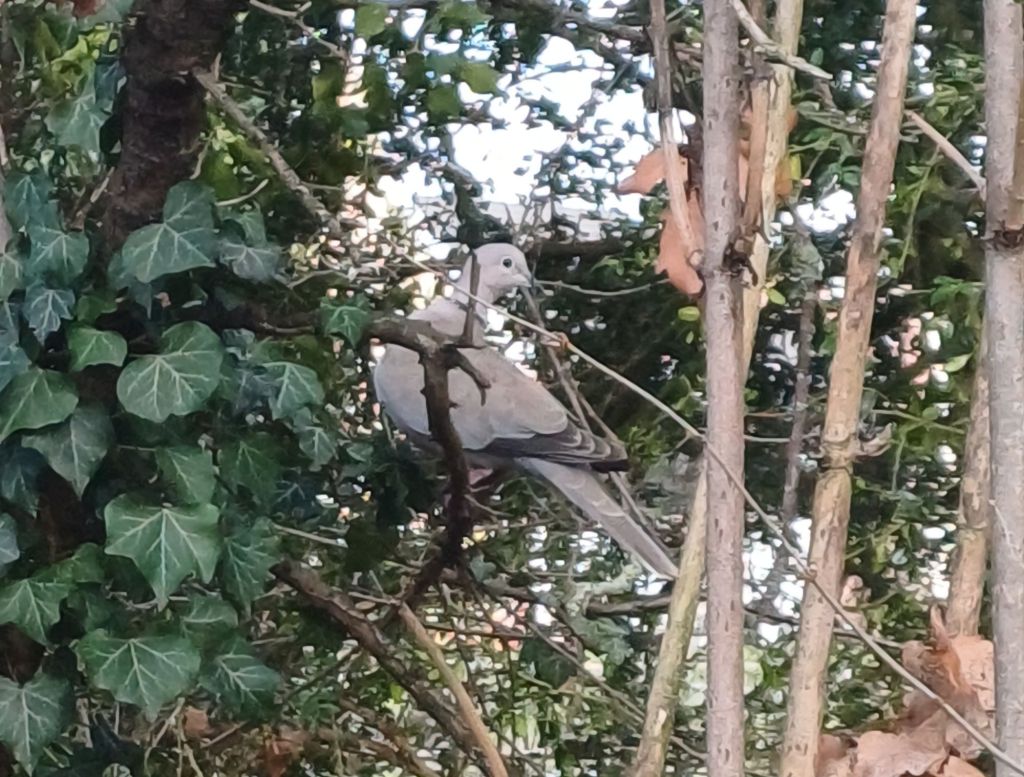
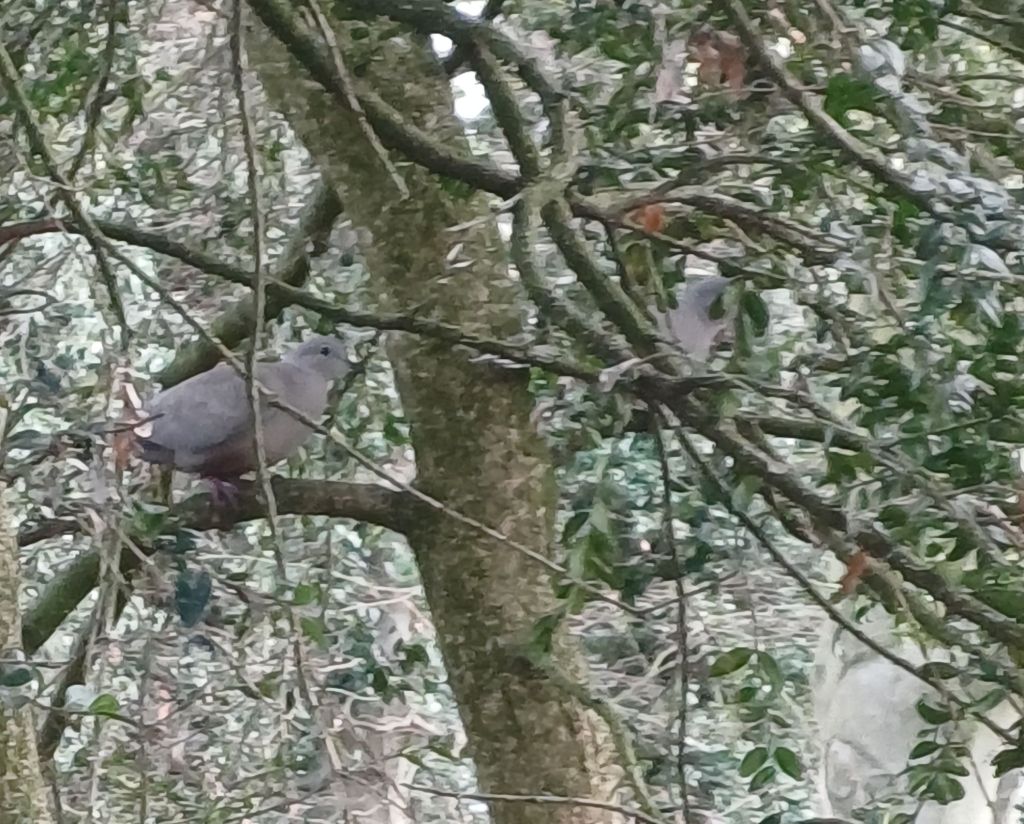
They are usually found on their own or in a pair. They are also able to nest any time of year if the weather is mild, where on average, they lay 2 eggs. Doves are monogamous, and mate for life, both male and female collared dove take it in turns incubating the eggs for up to 17 days, and once they are hatched, the chicks stay in the nests for up to 19 days (BTO, 2023).
Within folklore, the collared dove is often thought of in a greek myth, where zeus turned a maid who complained about her low wages of ‘decaocto’/eighteen pieces, into a dove to shame her (British Trust, 2022). However, doves also often represent peace and love.
References
British Trust for Ornithology. “Collared Dove | BTO.” Bto.org, 2023, http://www.bto.org/learn/about-birds/birdfacts/collared-dove. Accessed 1 Mar. 2026.
Garden Wildlife Health. Trichomonosis in Garden Birds Agent. Sept. 2017.
RSPB. “Collared Dove Bird Facts | Streptopelia Decaocto.” Www.rspb.org.uk, http://www.rspb.org.uk/birds-and-wildlife/collared-dove. Accessed 1 Mar. 2026.
Sharp, Gemma. “All about the Collared Dove – GardenBird.” GardenBird, 30 May 2022, voice.gardenbird.co.uk/all-about-the-collared-dove/. Accessed 2 Mar. 2026.
The Wildlife Trusts. “Collared Dove | the Wildlife Trusts.” Www.wildlifetrusts.org, http://www.wildlifetrusts.org/wildlife-explorer/birds/pigeons-and-doves/collared-dove. Accessed 1 Mar. 2026.
Trust, British. “Collared Dove Guide: How to Identify, the Connection to an Ancient Greek Legend, and When They Arrived in the UK.” Discover Wildlife, 22 June 2022, http://www.discoverwildlife.com/animal-facts/birds/facts-about-collared-dove. Accessed 1 Mar. 2026.
Ward, Mark. RSPB Pocket Garden Birdwatch. RSPB, 2020, p. 93.
 Jorja's Ecology Blog
Leave a comment