
Species name: Senecio jacobaea
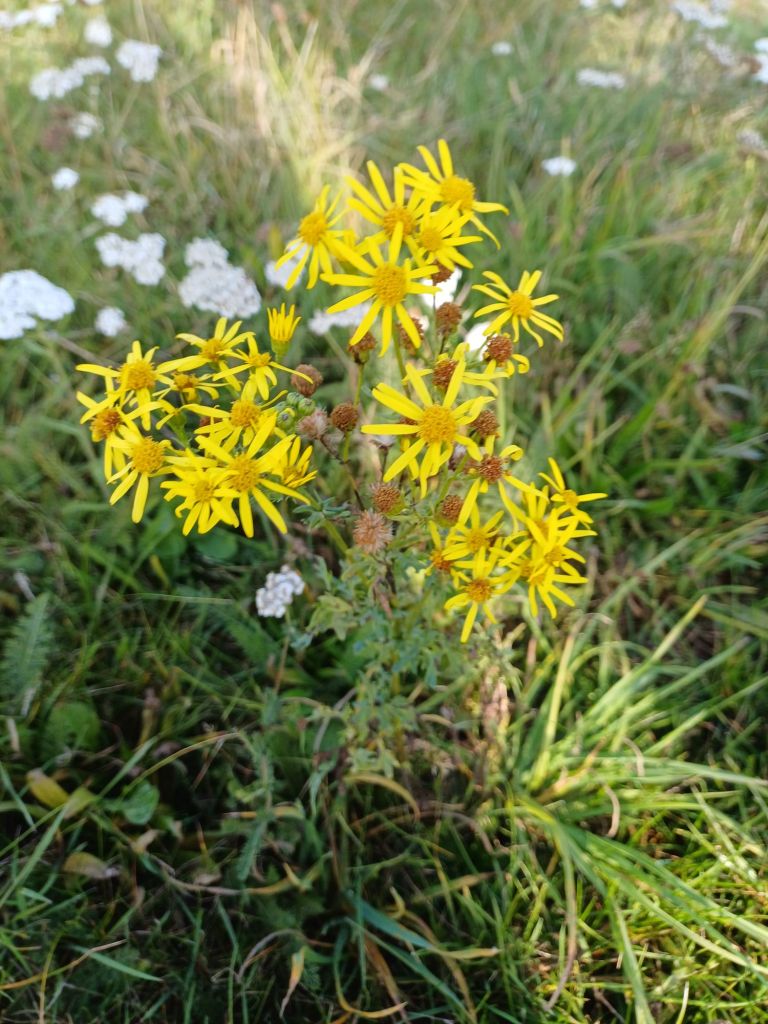
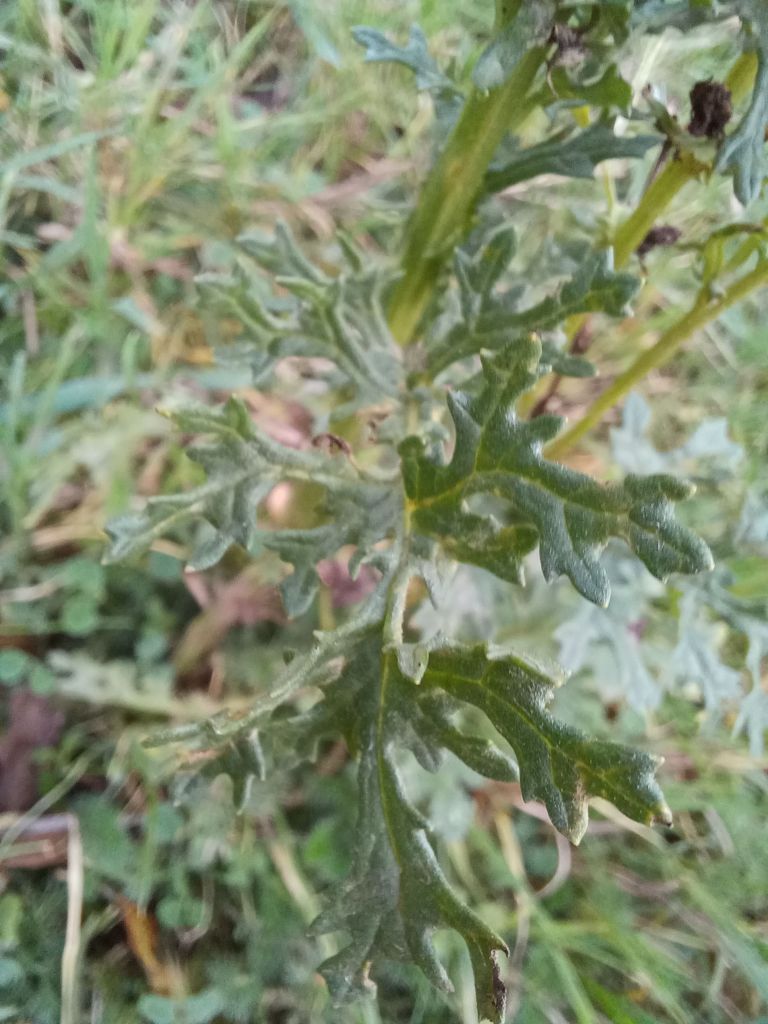
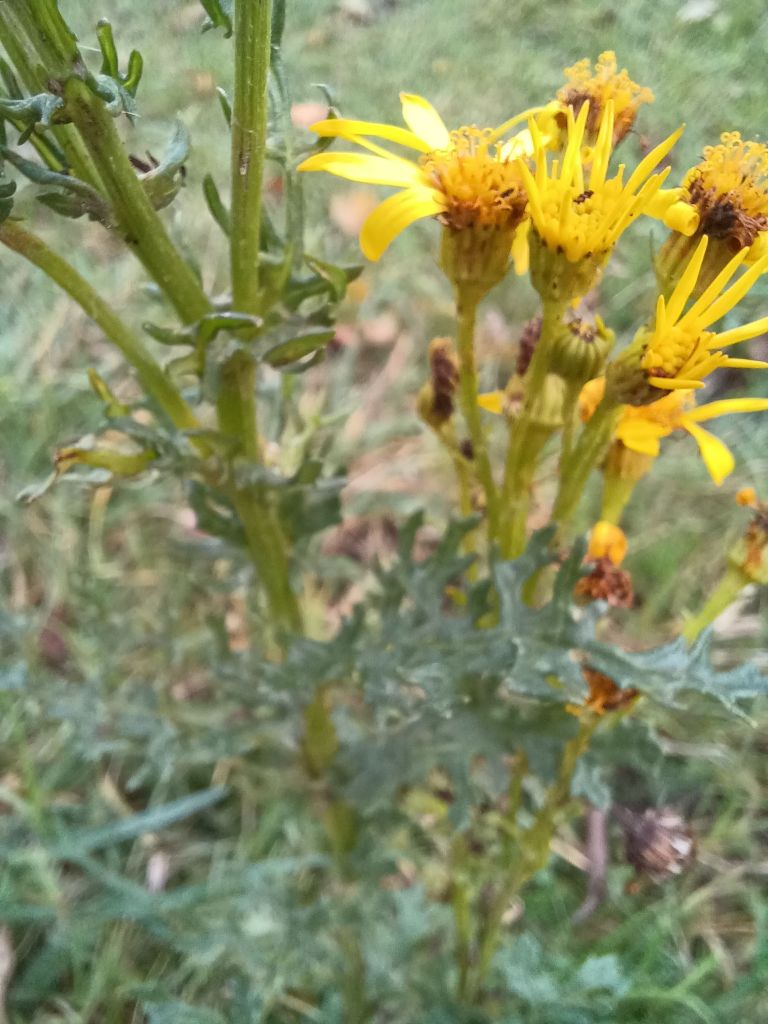
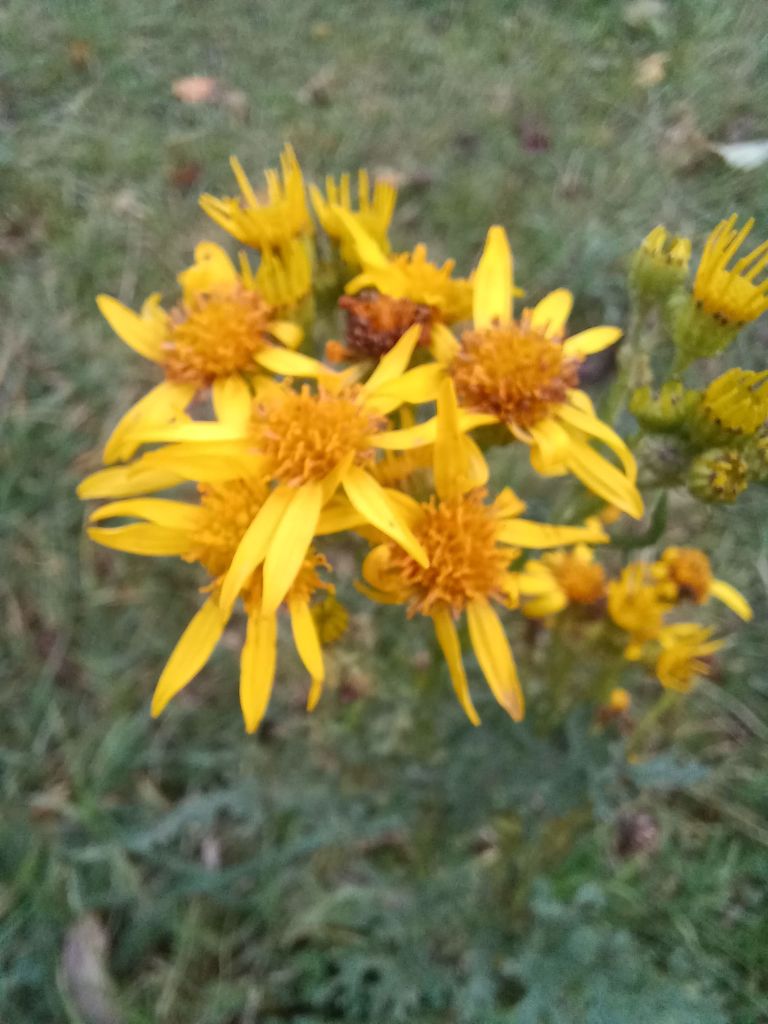
The common ragwort is a common yellow wildflower which has a widespread distribution across the UK, found within many different habitats, such as grassland, heathland, farmland, coasts, wetlands, rocky habitats, woodlands, towns and gardens. These flowers are daisy-like and can grow up to 1m tall (The Wildlife Trust, ND), with yellow flattened flower heads and pinnately lobbed leaves with the end lobe being blunt on the stem, which has little to no hairs.
The ragwort tend to be problematic, as the flower can be toxic once consumed, as it can cause liver poisoning, which can be harmful to livestock, such as cattle and horses, which might eat it when grazing. However, the plant is still very beneficial to insects, as it provides nectar for different pollinators, with it being a food source for nearly 80 insect species in the UK, 30 of those species are entirely dependent on ragworts for their food (Buglife, 2012), with some examples being bees, wasps, hoverflies, butterflies and moths. This can lead to ragworts having a high conservation value for these invertebrates.
The wildflower is native to northers Eurasia, with it being widely spread in Europe. It is labelled as a noxious weed within the UK, which means its a harmful weed to agricultural or horticultural crops, natural habitats, humans and livestock. However, the common ragwort has became an invasive species in other regions such as the USA, South America and Australia.
Control measures have been set in place in many areas, including in the UK, such as by using herbicides and pulling the plants up (Cornwall gov, 2025). However, the use of herbicides also need to be controlled, as they have a negative effect on the rest of the environment as well, such as through runoff, which therefore can effect other plant species. Mechanical cutting is also a method that can be used to manage the growth of ragwort, but the cut material needs to be collected afterwards, so its not consumed by animals, which can be done by bailing the cut ragwort, and then burning them (Somerset Wildlife Trust, 2025).
The Ragwort is in the list of species covered by the Weeds Act 1959, which means a clearance notice may be issued to those who allow it to spread into neighbouring land where it could harm livestock (Somerset Wildlife Trust, 2025). This makes it so the its necessary for the landowner to clear ragwort away from the boundary of their land. However, as said within the Ragwort control act, 2003, we do not want to get rid of ragworts, as the positively benefit biodiversity of invertebrates, but their distribution needs to be controlled to protect other species.
Within folklore, the Celtics saw common ragwort as the ‘fairy horse/steed’ (Emerald Isle, 2024), as they believed it was used by fairies for magical flight, so if they were plucked they feared it would make the fairies upset, so apologies would need to be made, if not there was a risk of being cursed. Folklore also warned that when humans were caught in a field filled with ragworts at night, fae music would draw them in, where they would be forced to ride with the fairies, which is where the saying ‘Away with the Fairies’ came from, as it was said the people never returned the same.
References
Buglife – The Invertebrate Conservation Trust. “Ragwort Fact File.” Buglife, 14 May 2012, web.archive.org/web/20120514042802/www.buglife.org.uk/conservation/currentprojects/Habitats+Action/Ragwort/ragwortfactfile. Accessed 10 Feb. 2026.
Cornwall gov. “Common Ragwort – Cornwall Council.” Cornwall.gov.uk, 2025, http://www.cornwall.gov.uk/environment/trees-hedges-and-woodlands/invasive-plants/common-ragwort/. Accessed 10 Feb. 2026.
Emerald Isle. “The Buachalan Buidhe.” Emeraldisle.ie, 2024, emeraldisle.ie/the-buachalan-buidhe. Accessed 10 Feb. 2026.
Somerset Wildlife Trust, and Chris Eyles. “Management of Ragwort on Nature Reserves | Somerset Wildlife Trust.” Somersetwildlife.org, 29 July 2025, http://www.somersetwildlife.org/blog/chris-eyles/management-ragwort-nature-reserves. Accessed 10 Feb. 2026.
The Wildlife Trust. “Common Ragwort | the Wildlife Trusts.” Www.wildlifetrusts.org, http://www.wildlifetrusts.org/wildlife-explorer/wildflowers/common-ragwort. Accessed 10 Feb. 2026.
 Jorja's Ecology Blog
Leave a comment